Inclusive markets
Making food markets work for everyone
Making food markets work for everyone
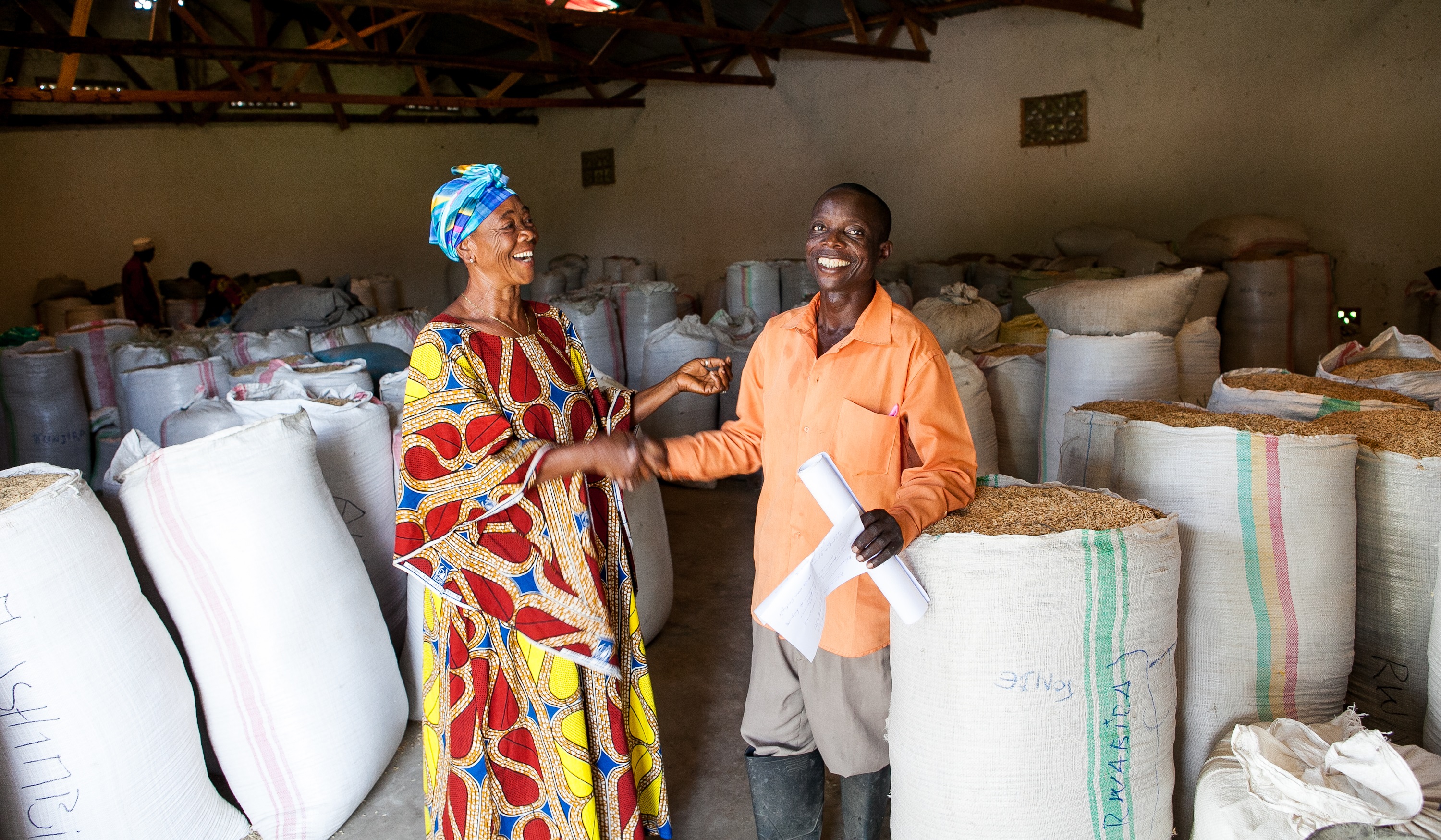
80% of the food that is consumed worldwide, is produced on family farms. Individually, however, small-scale farmers are often cut out of the trade, ending up in poverty and leaving their huge potential untapped. For women, young people and indigenous populations, this holds even more true. Ironically, 80% of the world’s hungry are directly involved in food production. To ensure sustainable supply chains and self-sustaining farming businesses, smallholder farmers must be offered a fair deal.
At the same time, recent crises such as the COVID-19 pandemic have left little doubt about the fragility of food systems around the world. In 2020, when COVID-19 transport restrictions hampered global food distribution channels, the world rediscovered the value of localised food systems and many consumers were forced to rush to their local food providers to get their weekly supply of fresh food. This only exacerbated an existing trend: moderate or severe food insecurity has been climbing slowly for six years and now affects more than 30% of the world population. Food prices have been rising significantly, in some cases up to 65% since the start of the pandemic.
The role of local authorities in creating a favourable environment for local healthy and sustainable food chains to blossom is increasingly being documented. However, they cannot do this alone. While they can create strong incentives for change through obligations, restrictions, taxes and subsidies, economic actors such as retailers, institutional buyers and other food companies also have powerful cards to play thanks to the power of their purse. For healthier and more sustainable food to reach urban markets, there need to be incentives for all actors in the chain to modify their behaviour. Without a good and profitable business model that works for everyone, and especially smallholder farmers and buyers, sustainable food chains are unlikely to be scaled up. As such, inclusive business relationships involving buyers, processors and rural, peri-urban and urban producers can be a powerful enabling factor in the transition towards sustainable food systems.
“Food markets must become more inclusive and offer value to everyone involved in the food chain, from producers to consumers. Inclusive business is a key condition for overcoming the challenges linked to our food systems.” Josephine Ecklu, Inclusive business coordinator, Rikolto
“Inclusive markets” is one of the three strategic pillars of our programme, next to sustainable production and enabling environments. It is a notion that, for us, covers several facets that are equally important within our food system. It refers to:
When we talk about inclusive business, we mean serious business. It’s all about doing business with a long-term outlook, fulfilling the needs of farmers and buyers alike. With this kind of forward-looking strategy, they can plan ahead more carefully, resulting in stronger businesses. Our work on Inclusive Business starts with amarket assessment to help figure out what is stopping farmer businesses frombeing competitive and getting private sector investment. After that, we co-design solutions with farmer organisations and buyers, and use tools to address the gaps we have identified. Listen to our colleagues around the globe defining inclusive business.
At Rikolto, we use the LINK methodology developed by the International Centre for Tropical Agriculture (now Alliance Bioversity & CIAT) and other organisations within the Sustainable Food Lab to guide our efforts to foster more inclusive food chains and business models. The methodology is usually applied by all chain actors with the support of an external facilitator and is underpinned by six principles:
Rikolto has been facilitating inclusive business models by engaging both private and public stakeholders. With 50 years’ experience of working with smallholder farmers’ organisations across three continents, we have developed an in-depth knowledge of the challenges they face to become solid and professional business organisations. We know that competitive farmer organisations play a critical role in organising collective marketing, which is why we strengthen their capacity to respond to market demands in terms of quality, food safety and sustainability. Nevertheless, in order for these farmer organisations to grow, they need better access to affordable finance. This is often a challenge due to the perception of high risk and low return by capital providers. At Rikolto, we are bridge-builders. Together with research institutions and commercial entities, we design innovative and tailored methods to improve the inclusivity of value chains, creating win-win solutions for companies, farmers and consumers.
Discover some of the cases that we have brokered.
Our first steps in building trustworthy relationships between farmers and food companies date back 15 years, to the start of our collaboration with the Belgian retailer Colruyt. The collaboration was focused on learning together and making supply chains of products in Colruyt’s stores fairer, more transparent, and more environmentally friendly. In this article series, we unpack each of the six inclusive business principles mentioned above, and show you how they translate into practice.
To date, inclusive business approaches have mostly been used in the context of global value chains such as coffee or cocoa, and less so in the context of local or urban food supply chains. At Rikolto, one of our priorities is to explore and test how inclusive business principles can be integrated into the food sourcing models of key urban buyers: supermarkets, institutional kitchens, e-commerce platforms and, of course, also traditional markets (although we are acutely aware that untangling supply networks will be an incredible challenge).
We focus specifically on inclusive food markets that cater for smallholder producers and vulnerable urban consumers. To help develop such markets, we professionalise farmer organisations, facilitate their access to finance and business development services and promote inclusive business relations in food chains. We also facilitate sustainable food entrepreneurship. As part of our Generation Food programme, young food entrepreneurs in Tanzania, Uganda, Belgium, Burkina Faso and Ecuador receive access to training and resources. The Generation Food incubators are fertile ground for innovative businesses that contribute to making urban food systems more sustainable.
Furthermore, we strive for more efficient and inclusive distribution of locally produced, safe and healthy food, using innovative business models and digital tools. This way we bridge the distance between farmers and consumers. Short chain platforms and food hubs, especially those organised by farmers themselves, can rationalise logistics and paperwork while putting farmers in a price-setting position.
Although urban markets are increasingly concerned about sustainability, safety and fairness, relying on consumer demand alone is not enough. This is why inclusive business practices must go hand-in-hand with ambitious, well-resourced local food policies and innovative governance mechanisms in which a diverse and representative group of actors work together to develop inclusive business models for supplying cities. In light of this, an ongoing project in Lima (Peru) and Quito (Ecuador), jointly implemented by Ecosad, Funsad, RUAF and Rikolto, with the support of Canada’s International Development Research Centre, will seek to understand how food hubs, which bring healthy locally produced food to urban citizens through neighbourhood markets, can be established around inclusive business principles while following a rights-based approach.
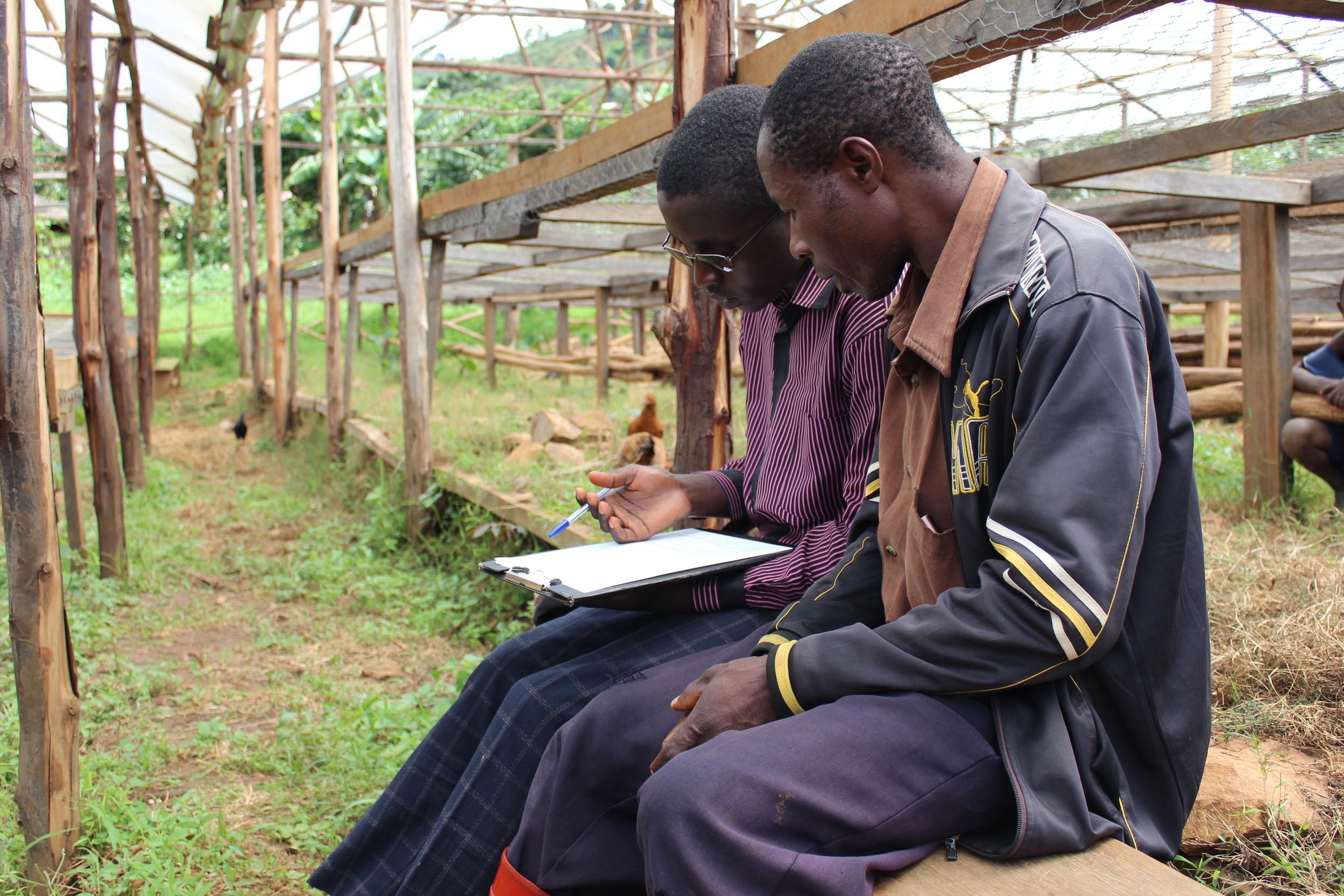
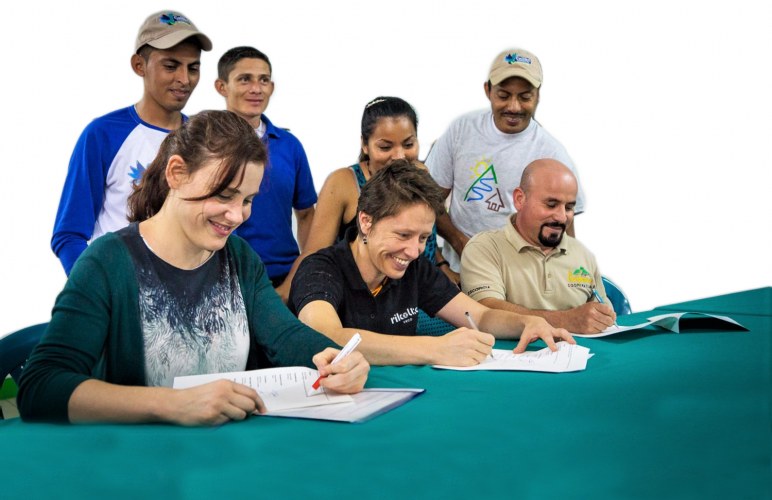
We support cooperatives on their road to professionalisation, focusing amongst other things on developing financial and business skills. This enables them to gain increased value from specialty and quality cocoa and coffee through more inclusive business relationships. This professionalisation process contributes to strengthening buyers´ supply chains, which in turns motivates them to support producer organisations and expand the business model to other suppliers.
Working on the professionalisation of cooperatives also includes the participation of women and young people in the sector and in the leadership of cooperatives. This can involve supporting young cocoa and coffee farmers to set up their own business, for instance cocoa pruning services in Ghana and Côte d'Ivoire, coffee seedling businesses in the DR Congo, female coffee farmers’ side businesses in Ecuador and Peru, …
We have a long-standing track record in brokering relationships with supermarkets and companies, so that cooperatives can take part in sustainability programmes they have set up and form inclusive business relationships. In Indonesia, as long ago as 2016, Rikolto, Mars Food and AMANAH farmers’ cooperative facilitated improvements in quality, traceability, and collective selling for about 7,500 cocoa farmers in Sulawesi, Indonesia. Mars supported young cocoa farmers in becoming professional service providers in their own communities. Rikolto provided business coaching to the cooperatives and farmers set up a mobile communication system to receive information on world market prices. Meanwhile, Mars has been replicating this model worldwide.
As we focus more on diversification in our new programme, we also support smallholders to link to markets for other crops being produced in cocoa and coffee landscapes, for instance in our cocoa programmes in Ghana. Inclusive business also means supporting farmer organisations and small and medium-sized enterprises in their dealings with financial institutions, to improve their access to finance.

For many African countries, domestic markets are strongly dependent on imported rice, unveiling an immense opportunity for rice farmers. Rice is less oriented towards high-value markets in northern countries than cocoa or coffee, but local and institutional buyers are a promising market. Strengthening and improving national production capacity can ensure larger market shares for local producers, sufficient affordable and sustainably produced local rice for consumers and create new business opportunities for the whole value chain.
Inclusive business relations in the rice sector can benefit producers, millers, wholesalers and consumers. While retailers offer consumers rice that is affordable, safe, healthy and nutritious, based on agreed standards, smallholder producers will benefit from inclusive business relations with millers and wholesalers, who assure market access through formal contracts or binding agreements. In helping make farmers organisations more professional, we will also assist them in obtaining loans and credit for business growth.
.JPG)