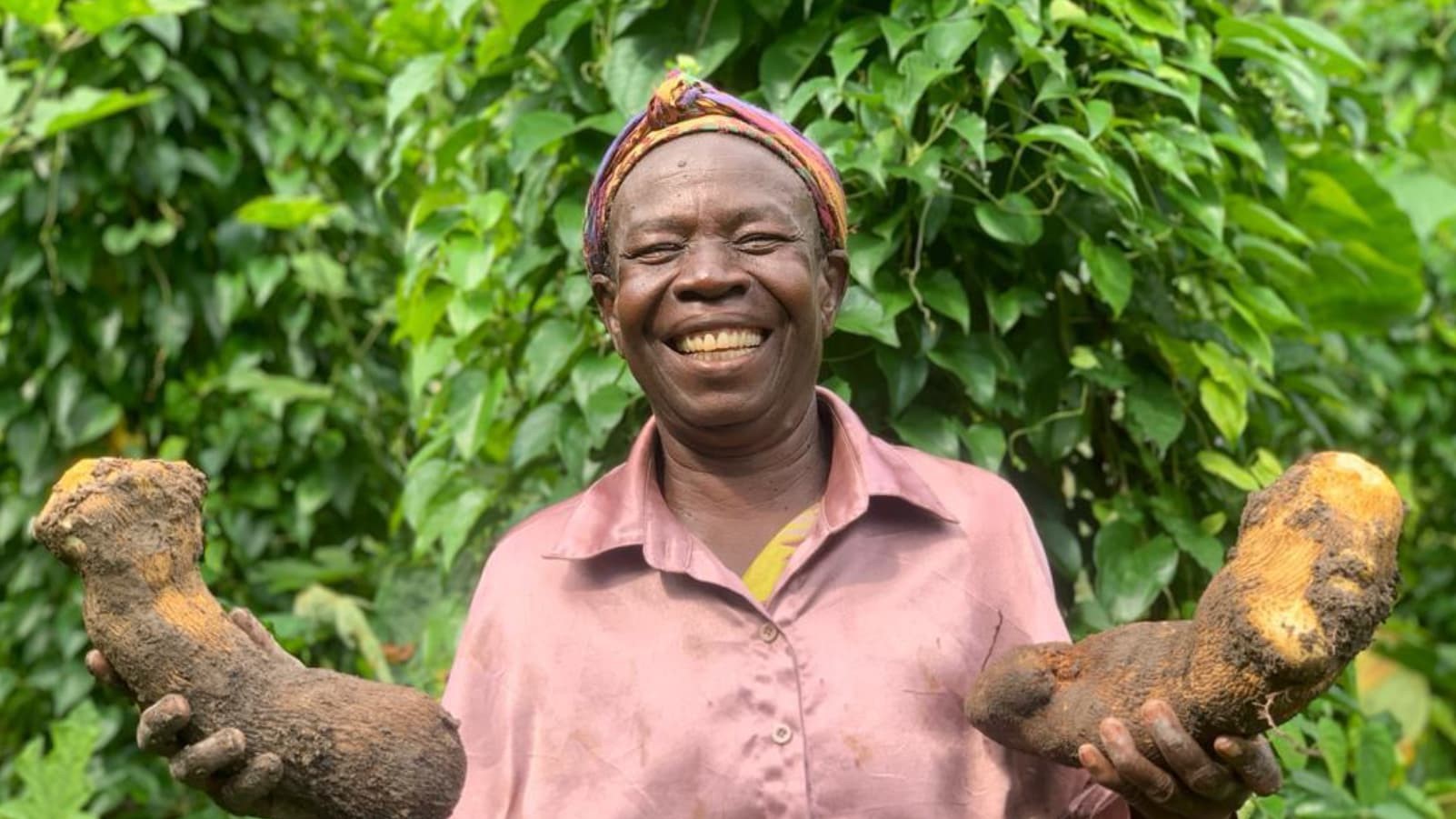

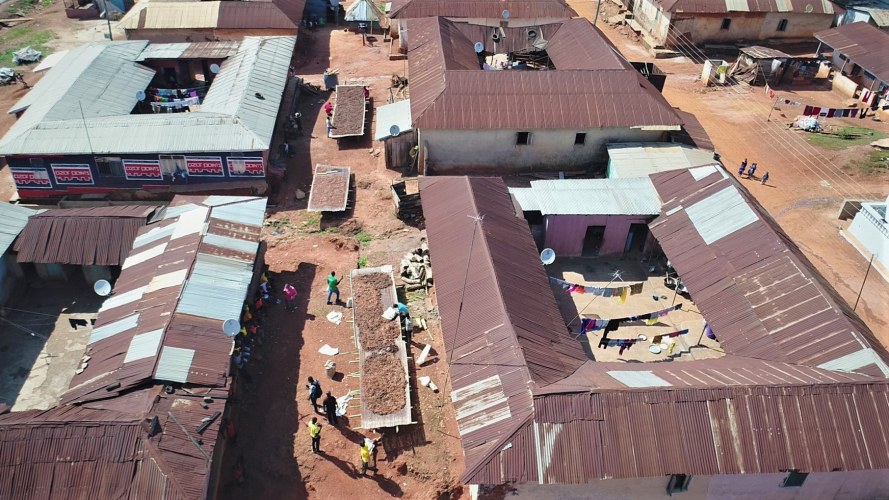
Many Ghanese cocoa farmers live in poverty. Often it is not enough for a small-scale farmer to have a minimum price guaranteed for a cash crop such as cocoa. If we do not make sure that farmers can make a decent living out of their activities, deforestation and child labour will not be solved. We joined forces with supermarket chain Lidl, Fairtrade Belgium & International and Kuapa Kokoo, to diversify farmers' incomes and professionalise production processes.



We see that it is often not enough, for small-scale farmers, to have a guaranteed minimum price for a cash crop such as coffee or cocoa. Therefore, this project is based on the Living Income framework. It aims to tackle the root cause of problems in the cocoa industry: poverty. If we do not look at farmers’ income first, tackling deforestation and child labour will remain problematic. The Living Income calculates the net annual income a farmer’s family’s needs in order to fulfil their basic human rights in a specific location. This project will be used to test the implementation and calculation of this new concept.
This project was one of the first achievements of the Beyond Chocolate charter signed by all the main players in the Belgian sector. As part of the implementation of this project, we went beyond our action in Ghana.Results

What have we achieved?
What do we want to achieve by 2030?
The project aims to increase the numbers of beneficiaries by expanding to more Kuapa Kokoo members and other chocolate products, spreading to other Lidl countries and by inspiring other retailers.


In 2015 Lidl committed to have all its chocolate supply sold accordingly to the sustainable standards of UTZ, Rainforest Alliance and Fairtrade. The goal was achieved in 2016 and, 2 years later, in 2018, Lidl signed Beyond Chocolate. As a result, Lidl invited stakeholders around the table to develop a first initiative around Living Income in the chocolate sector. Rikolto and Fairtrade were involved since the beginning and, after 2 years, a first product was born under the name Way To Go: a chocolate bar for which an extra premium, on top of the Fairtrade premium, is paid to substantially move towards a Living Income. Today Way To Go chocolate bars can be found in Belgium and Netherlands and other countries will follow soon.
Generation Food is part of Rikolto's international program Food Smart Cities program. In various cities around the world, including Ouagadougou, Arusha, Arusha, Leuven, and Quito, Rikolto supports municipalities in formulating sustainable food policies and putting them into practice. In co-creation with universities, businesses, local food production/distribution initiatives, municipalities and farmers' cooperatives, we are developing business models (from farm to fork) that make the transition to sustainable cities possible. Through Generation Food, Rikolto advocates for the active participation of young people in the development of the future food system.