
La almost all rice is produced by family farmers in West Africa. However, rice farmers' organizations are still poorly recognized by States as full partners in the development of the rice sector. As a result, they are not very involved in defining rice development policies, even though they participate in their implementation and are the first beneficiaries. Their involvement in commercial transactions is, in many cases, limited to the sale of their rice to a state-owned company at a fixed price. In the most critical situations, the good intentions of the State can become harmful factors for producers or disrupt the market to the detriment of producers (case of imports without taking into account local availability).
The action is thus aimed at making rice value chains in West Africa more sustainable and competitive, so that they contribute to food security in the region. More specifically, it seeks to strengthen farmers' organizations (POs) so that they influence the formulation and implementation of public policies as well as the governance of rice value chains, in favor of local family rice farmers, both at the national level and in the ECOWAS region.
This situation is favored by the poor analytical capacity of POs (analysis of the sector and the policies that govern it), which limits their ability to negotiate and dialogue with the private and/or public sector. It is also the consequence of their poor capacity to analyze the market, to formulate advocacy strategies to influence policies in their favor.
Bringing actors (producers and processors of national rice) who are supposed to implement them and to be the primary beneficiaries to be better involved in the formulation of national and regional food security policies is becoming a necessity in this context.
This is the challenge that a consortium of NGOs decided to take up together (Rikolto, SOSFAIM, GLOPOLIS, GREEN AFRICA MALI) and the framework for consultation of ROPPA rice producers through the implementation of this project starting in January 2014 for a period of three years.

The implementation of the action is based on the method for the development of multi-actor processes to connect small producers to modern markets. The method starts from a good understanding of the value chain and the institutional and political environment in which it takes place. An in-depth analysis of the dynamics, constraints and opportunities of the chain leads to the development of new ideas and their implementation through concrete pilot experiences. The capitalization of these experiences will make it possible to propose inclusive structures for the governance of the chain and changes to the institutional and political environment and thus to adopt strategies to support sustainable change at these two levels. The spearhead of the method is the meeting and dialogue between actors in the chain, making it possible to better understand the concerns and interests of others in order to define win-win actions, for example in the form of contracting production to thus meet market needs.
Concretely, the main actions selected are the strengthening the capacities of producer organizations (POs) to analyze value chains and the political and institutional environment. To do this, the following activities are implemented:
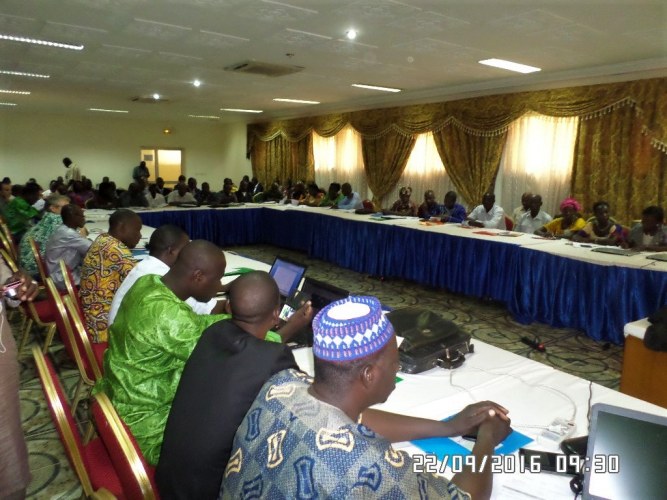
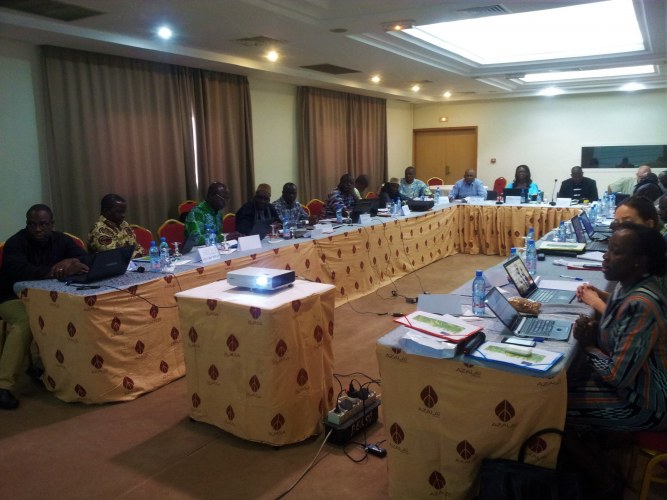
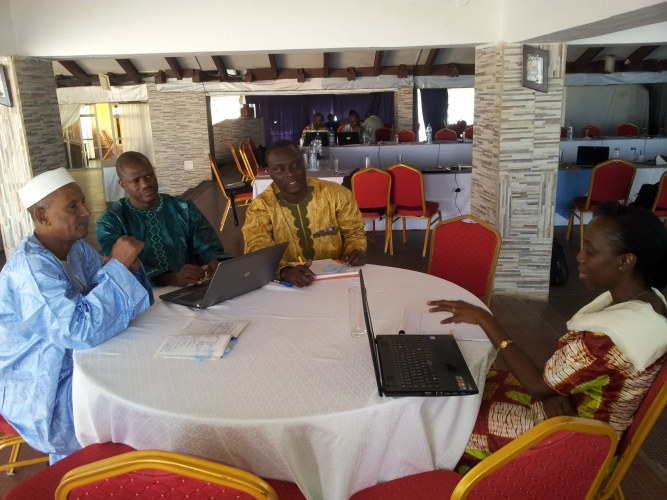
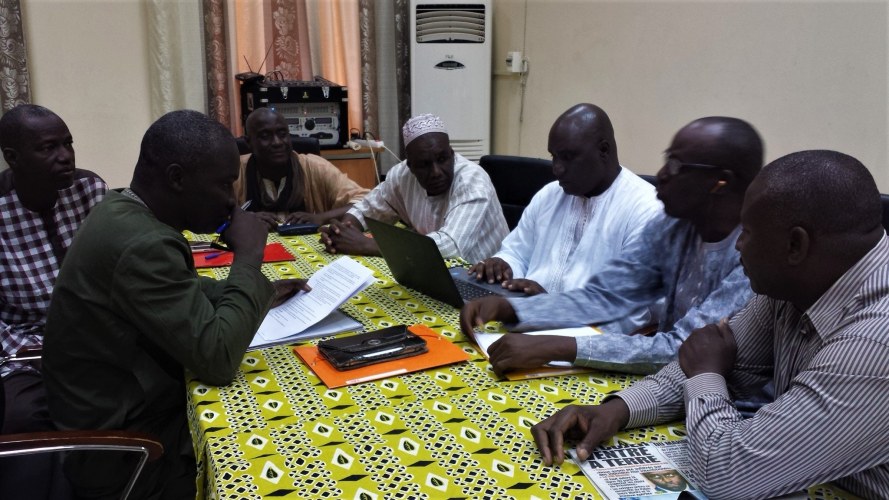
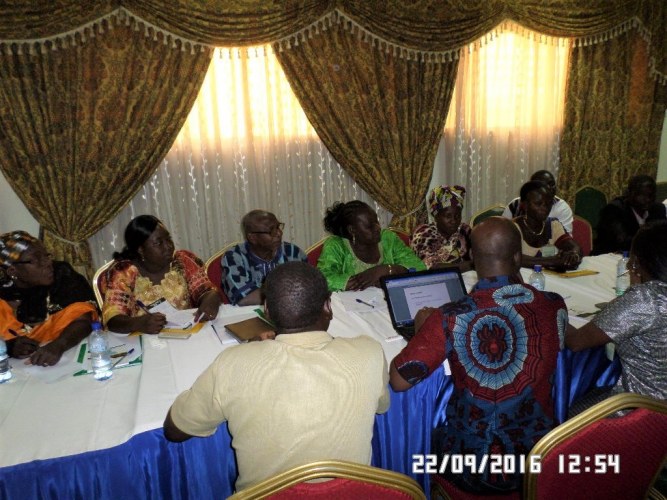
The project has significantly strengthened the capacities of farmers' organizations (POs) to analyze value chains and the political environment, to conduct negotiations and to advocate effectively. Comparative studies and analyses provided POs with up-to-date information on rice value chains, and helped them identify relevant advocacy themes. Training and multi-stakeholder meetings have improved the understanding of how value chains work. In addition, advocacy training has enabled POs to formulate solid arguments to negotiate with authorities and the private sector. POs have become more representative and legitimate, especially on issues of developing local rice value chains.
Thanks to their capacity building, POs have become real forces of proposal, capable of negotiating with private actors and authorities. Trained leaders have actively engaged in political dialogue and have seized opportunities in all countries to develop business and advocacy relationships.
All this has strengthened their relationships with the private sector and the authorities.
The project contributed to a better structuring of rice value chains and to the strengthening of their governance, promoting the emergence and dynamization of inter-professional organizations in several countries.
At the end of the project, three rice-growing interprofessions are fully functional in Burkina Faso, Mali and Senegal, all chaired by the producers. The process is also well under way. in Benin and Niger, stimulated in particular by exchanges of experiences between peers. In Burkina and Senegal, inter-professional organizations have been reinvigorated: CIRIZ (Senegal) has extended its representation at the national level and the CIRB has relaunched cooperation between the various links in the sector. In Benin, Burkina and Mali, umbrella organizations have strengthened their ties with their base, in particular through their involvement in institutional procurement and regional advocacy activities.
In Mali, the dissemination of 39 monthly newsletters and radio programs in local languages allowed actors to access reliable information on prices, supply and demand.
In Burkina Faso, a Web-to-SMS system, based on the platform SIMAGRI (developed by Afrique Verte), informs more than 6,000 followers on market trends, increasing transparency and decision-making.
In all countries, farmers' organizations (OP) have experienced the contracting with the public and private sectors, encouraging the formalization of exchanges.The duration of the project did not however make it possible to secure the first contracting experiences.The Rice exchanges, national and regional made it possible to conclude 30 sales contracts representing more than 13,000 tons of rice traded1.
The quality, visibility and competitiveness of local rice have improved significantly thanks to:
La farmers' food security has improved, driven by the increase in revenues linked to institutional purchases and promotional activities (in Benin, cheaper prices were able to be negotiated thanks to the involvement of supermarkets and semi-wholesalers). The involvement of women parboilers in these initiatives has strengthened their position in parboiled rice value chains.
Finally, the experiences of contracting, in particular via the specifications, have made producers aware of the importance of providing rice that meets market requirements, thus contributing to the better quality and competitiveness of local rice on the market.
Generation Food is part of Rikolto's international program Food Smart Cities program. In various cities around the world, including Ouagadougou, Arusha, Arusha, Leuven, and Quito, Rikolto supports municipalities in formulating sustainable food policies and putting them into practice. In co-creation with universities, businesses, local food production/distribution initiatives, municipalities and farmers' cooperatives, we are developing business models (from farm to fork) that make the transition to sustainable cities possible. Through Generation Food, Rikolto advocates for the active participation of young people in the development of the future food system.