Sustainable rice

Sustainable and organic rice for Malian consumers

December 4, 2025

Funded by the Belgian Cooperation (DGD), this project aims to strengthen sustainable and competitive rice value chains, increase farmers' incomes and improve access to quality food products on the market. It encourages the adoption of sustainable agricultural practices, the establishment of inclusive trade relationships, and the creation of an environment conducive to a more resilient rice food system.

Icon Place

Pays

Région

Ségou, San and Sikasso

Icon Scope

Objectif

A resilient, sustainable and inclusive rice food system

Icon Duration

Durée

2022 — 2026

The challenges

In Mali, rice production has experienced a remarkable growth, increasing by more than 200% between the beginning of the century and 2020, reaching nearly 2.15 million tons in 2022. The country now covers 88% of its national rice needs, a result that testifies to the considerable potential of the sector. However, behind these encouraging figures, players in the sector are facing challenges that still limit its full potential.

Many family farms lack access to land and the technical skills to produce sustainably. The low entrepreneurial capacities of operational managers and their organizations limit their growth prospects. However, the challenge is not limited to the individual: the entire sector must become professional in order to adapt to a changing market and become a real lever for sustainable rice production. Relationships between producers and rice farmers remain fragile, which leads to difficulties in sourcing paddy in sufficient quantity and quality, as well as to the quality of local rice that does not always meet consumer expectations. In addition, there are persistent obstacles to access to finance and market information, and an unfavourable regulatory framework.

However, national ambitions are clear: through the Agricultural Development Policy (PDA) 2014-2025, Mali intends to make agriculture the engine of its food sovereignty and reach 5.5 million tons of rice by 2025. To achieve this, the foundations of a more inclusive, resilient and sustainable rice system must be strengthened.
Dummy image

Our approach

Since 2014, Rikolto has been working alongside actors in the value chain to meet these challenges and the actions of the 2022-2026 program funded by the DGD build on the achievements of the work already carried out by Rikolto in the country.

To promote sustainable production, Rikolto is developing viable economic models (“business cases”) around sustainable rice. At the production level, this is reflected in the establishment of pilot projects based on the SRP standard (Sustainable Rice Platform) and the local organic participatory guarantee system (SPG), as well as by the strengthening service providers (BDS) on SRP standards. We also support farmers' organizations so that they can monitor quality themselves via an internal control system, manage their activities more rigorously and strengthen their commercial capacities.

To make it easier for producers to access the market, we are working on the professionalization farmers' organizations and to the establishment of equitable commercial relationships with private actors. This involves entrepreneurship training, the establishment of group sales and quality control systems in order to guarantee local rice that is competitive and appreciated by consumers.

One of the key axes of our approach is to coordinate and participate in multi-actor platforms, in order to strengthen coordination between actors in the sector and with policy makers. Organizations such as PNPRM (National Platform of Rice Producers) and IFRIZ (Interprofession de la Filière Riz) allow producers, as well as other actors in the sector, to make their voices heard and to advocate for public policies favorable to sustainable rice. The results of the pilot projects serve as concrete evidence to convince decision makers and partners of the economic, social and environmental benefits of sustainable rice.

We also collaborate with the Association of Consumers of Mali (ASCOMA) to strengthening local demand. Together, we are making consumers aware of the benefits of sustainable rice.

Improving policies, strengthening governance and stimulating demand makes it possible to scale up the impact of all actors who, step by step, are building a more just, inclusive and sustainable rice system for all.
No items found.

The results

“Farmers are adopting the SRP standard to improve incomes, strengthen environmental sustainability, and adapt to climate change.”

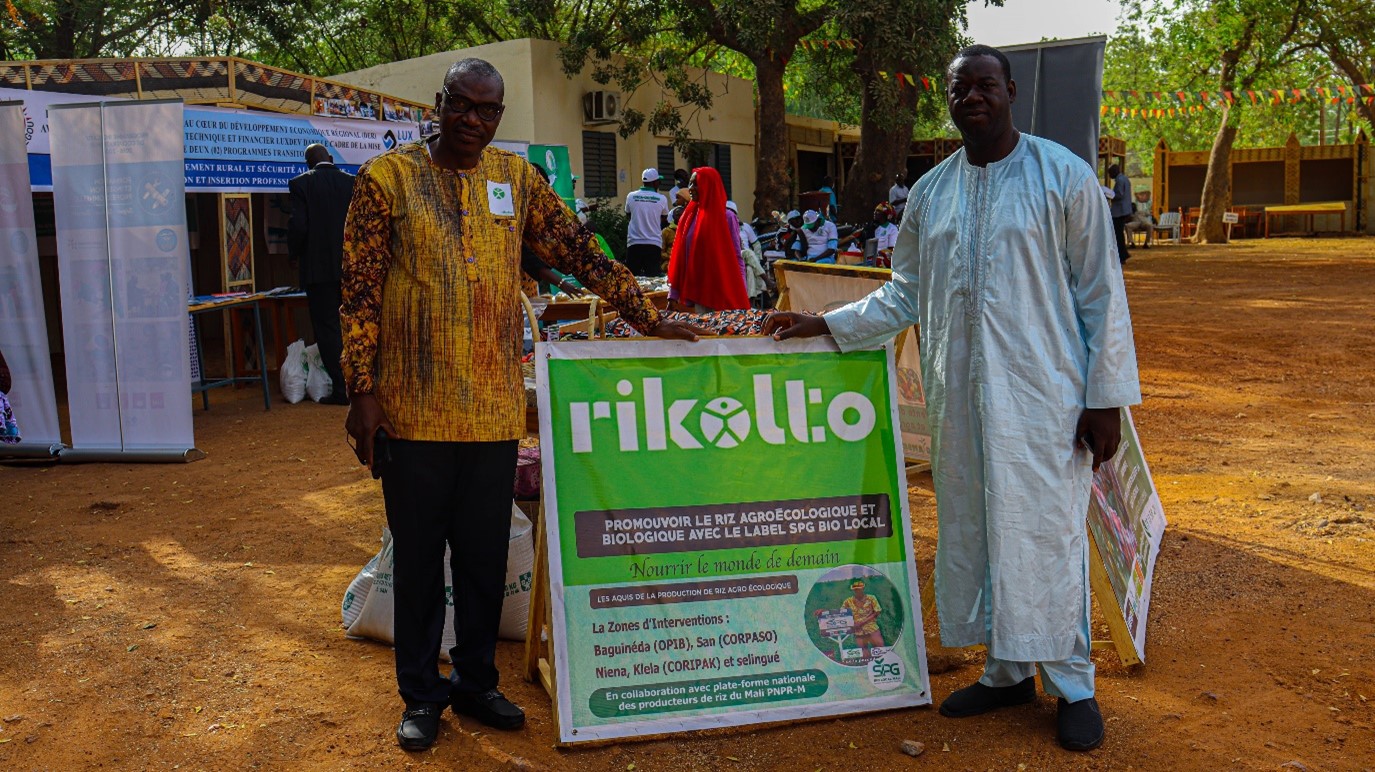
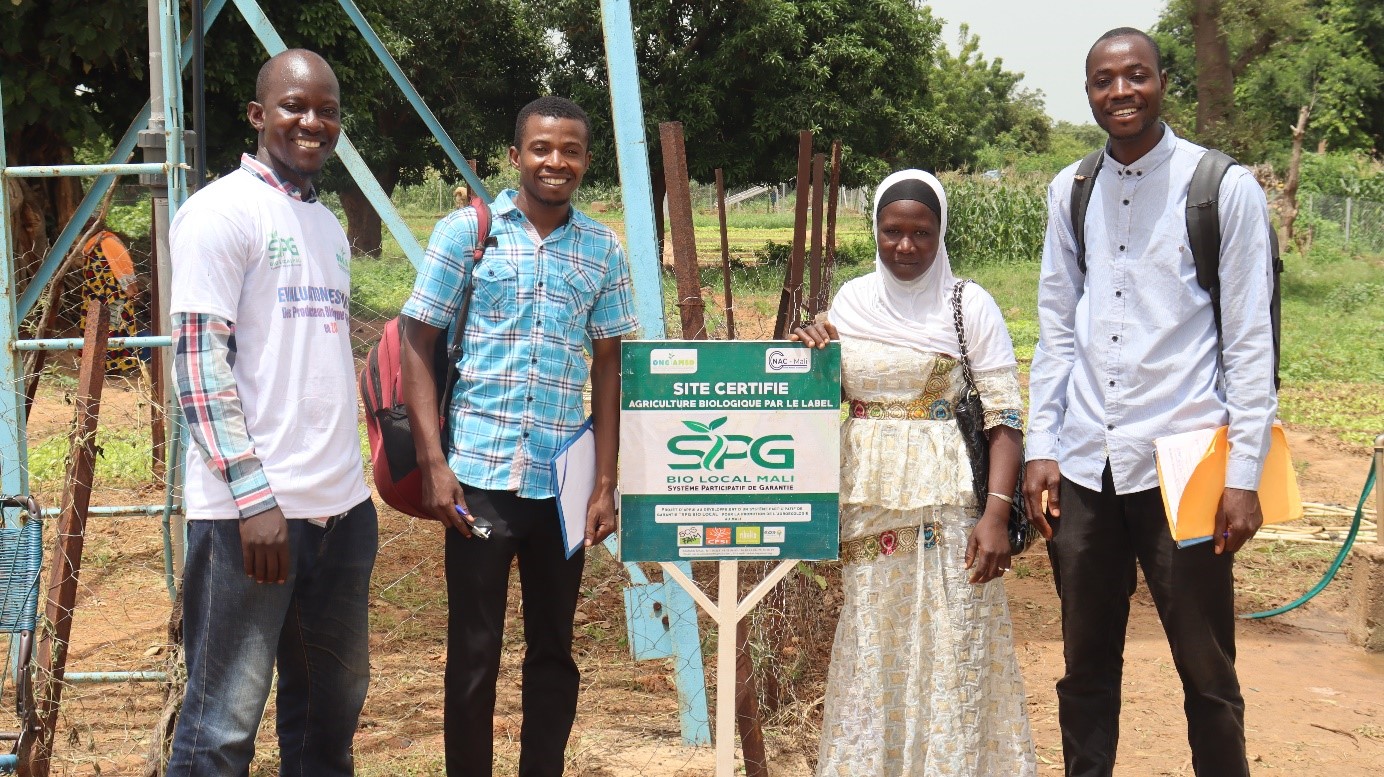
  • More than 2,600 producers have adopted the standards of the Sustainable Rice Platform (SRP) and the Participatory Guarantee System (GSP) local organic, improving their farming practices, their incomes and their resilience to climate change.
  • 17 demonstration plots covering nearly 19 hectares have made it possible to disseminate practices such as the Intensive Rice Crop System (SRI), integrated pest management, crop diversification and BOKASHI composting, reducing dependence on chemical fertilizers and pesticides.
  • Thanks to the SRP standard, producers adopt better management of water, organic matter (for example, avoid burning straw) and nitrogen fertilizers, thus contributing to the reduction of greenhouse gas emissions.
  • The SRP compliance rate increased sharply between 2022 and 2024:
    • CORPASO: from 0% to 10.2% of producers reaching a score of ≥90
    • CORIPAK: from 0% to 58% reaching a score of ≥90
    • All producers obtained scores above 60, “tending towards sustainability”
  • Producers are reporting cost savings, increased yields, and improved economic and environmental resilience. Despite a drop in the average annual net income per hectare — from 659 euros in 2023 to 445.28 euros in 2024 — producers have not been brought back to the 2022 level (181.33 euros). Maintaining a higher income than two years ago, in a context marked by floods, a reduction in subsidized fertilizers and stagnant prices, suggests a certain adaptive capacity and resilience of producers and of the system put in place.
  • A network of seed producers has been set up within CORIPAK, increasing the rejection rate of certified plots from 35% to 0% in one year, through training on ECOWAS seed legislation and production techniques.
  • 365 farmers (65% of whom are women) have been trained in organic farming, and 155 are now farming 75 hectares of organic land.
  • CORIPAK and CORPASO have acquired a internal control system (SCI) fully operational, allowing them to guarantee the quality and traceability required by buyers.

“Private actors maintain inclusive and transparent business relationships with sustainable rice farmers, including young people and women, and offer better quality rice to consumers.”

  • Thanks to iCRA's AgriBusiness Cluster (ABC) approach, Rikolto accompanied a process of strengthening commercial relationships between IFRIZ-M, its members and several processing units, including AgriSahel and Rizerie Royal. The volume of sustainable rice placed on the market has reached 20,429 tons in three years. Despite the drop in production in 2024 due to floods, the results remain encouraging: crop diversification, with 5,300 tons of maize and potatoes marketed, has contributed to reducing the vulnerability of producers.
  • In 2024, IFRIZ-M renewed its partnership with the Office of Agricultural Products of Mali (OPAM), the last of which dated back to 2020, by signing a contract for 3,500 tons of rice worth 1,765 billion CFA francs, generating 30 million CFA francs in equity for IFRIZ-M.
  • In their quest for quality paddy, the women of the Dunkafa cooperative were put in contact with the Cooperative of Rice Farmers of the West San Plains (CORPASO). This collaboration, which was still informal, resulted in the supply of around 32 tonnes of rice. Similarly, a partnership between the National Association of Rice Processors (ANTR-M) and five steamer cooperatives in the Sikasso region resulted in the signing of a contract for 96.5 tons.
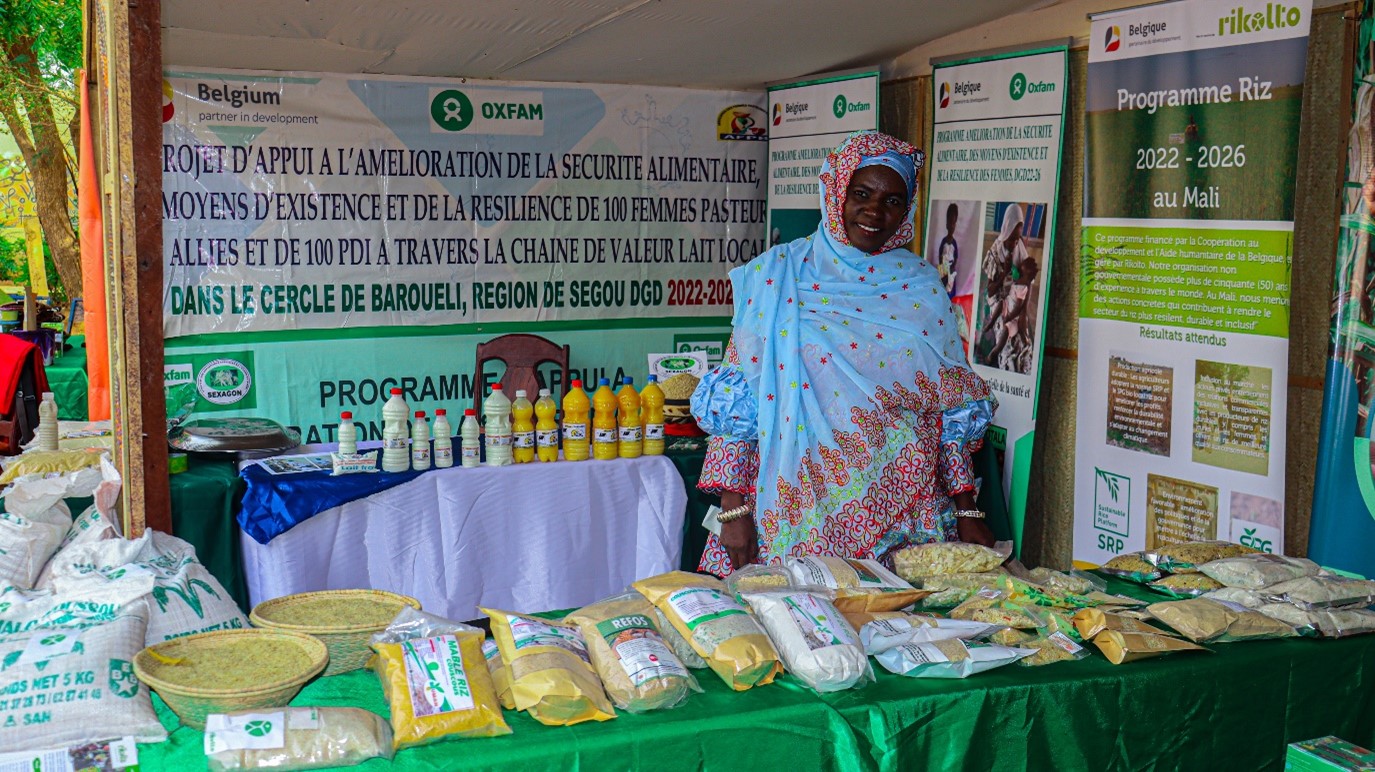
  • The partnership between PNPR-M and ASCOMA has contributed to strengthening the demand for sustainable rice. Supported by the Slow Food Mali movement, the awareness-raising actions conducted facilitated the introduction of local organic SRP/SPG rice into restaurant and hotel chains. In 2024, tasting workshops and radio programs organized with the National Federation of Industry and Catering Trades made it possible to better promote the taste and environmental qualities of sustainable rice.
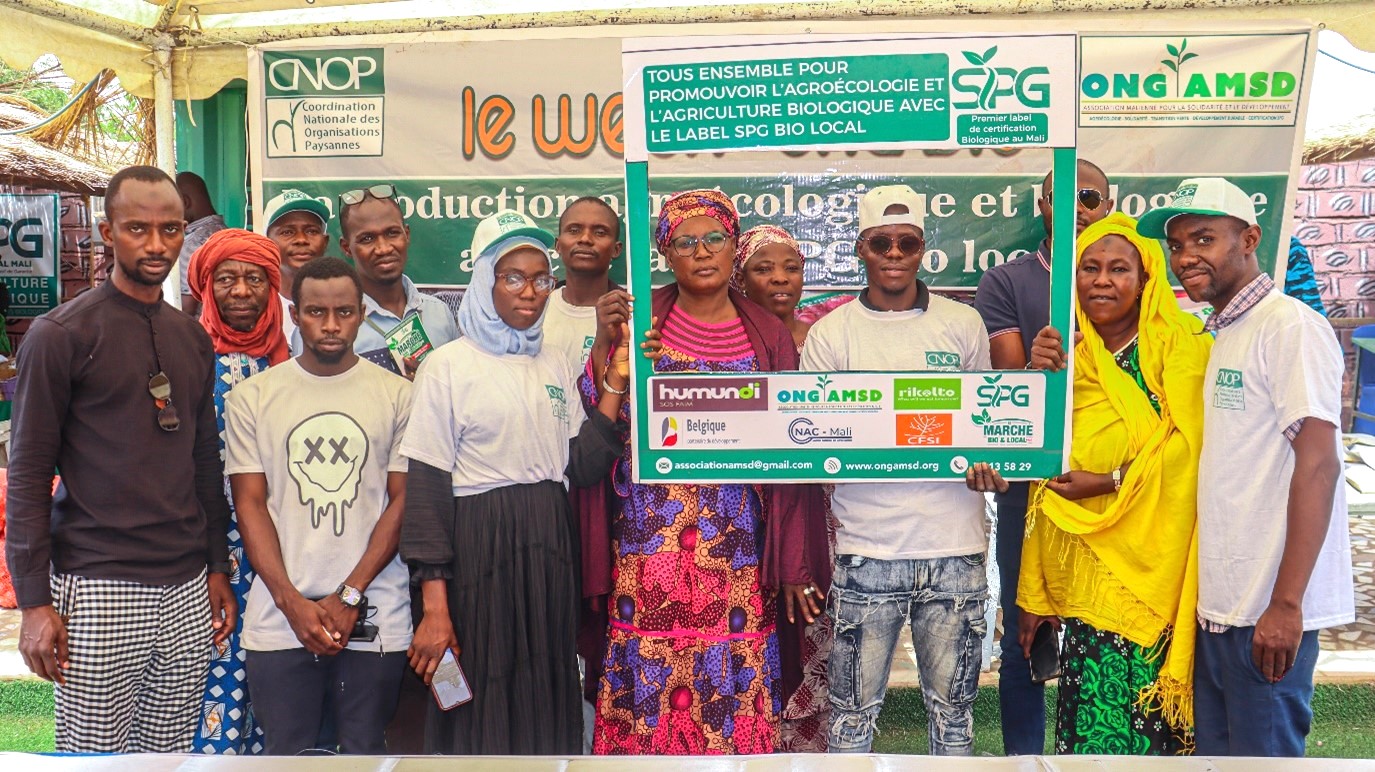
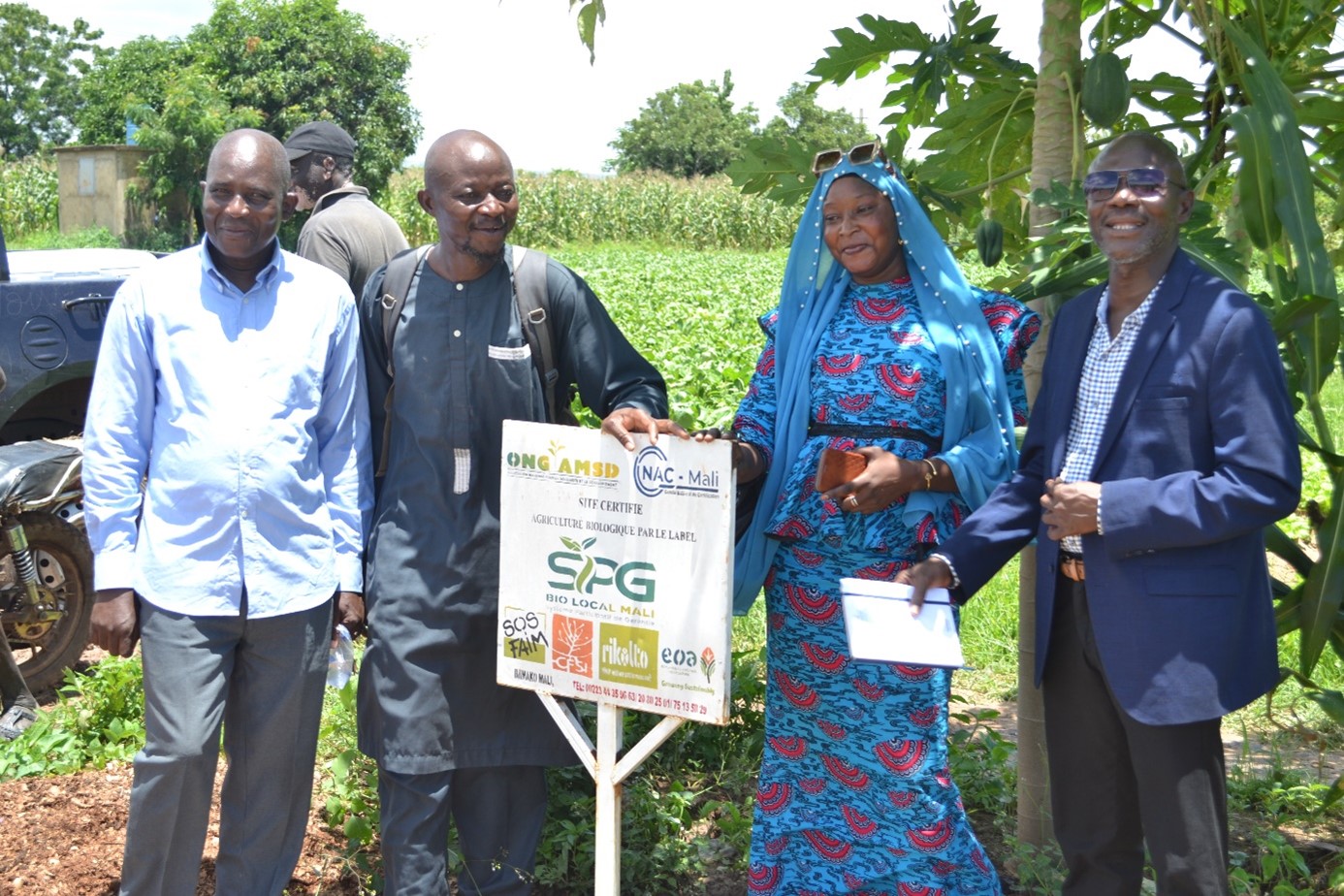
  • The organic and local market in Mali, launched by the NGO AMSD, has become a living space for the promotion of agroecological products. SPG certified rice sells for 750 FCFA/kg, including 600 FCFA/kg[1] for producers, almost double that of uncertified rice. Around 20% of the additional profits generated by this high-end rice are reinvested to help AMSD and ASCOMA promote PGS rice to consumers.

“Improving policies and governance to scale sustainable rice farming.”

  • In 2023, Rikolto co-financed with CIV/GIZ a workshop in Baguindela to review the provisional version of the National Rice Development Strategy (SNDR III). The comments made served to make the document more inclusive and relevant, and to inform the finalization of the document that integrates the promotion of sustainable production under the SRP model.
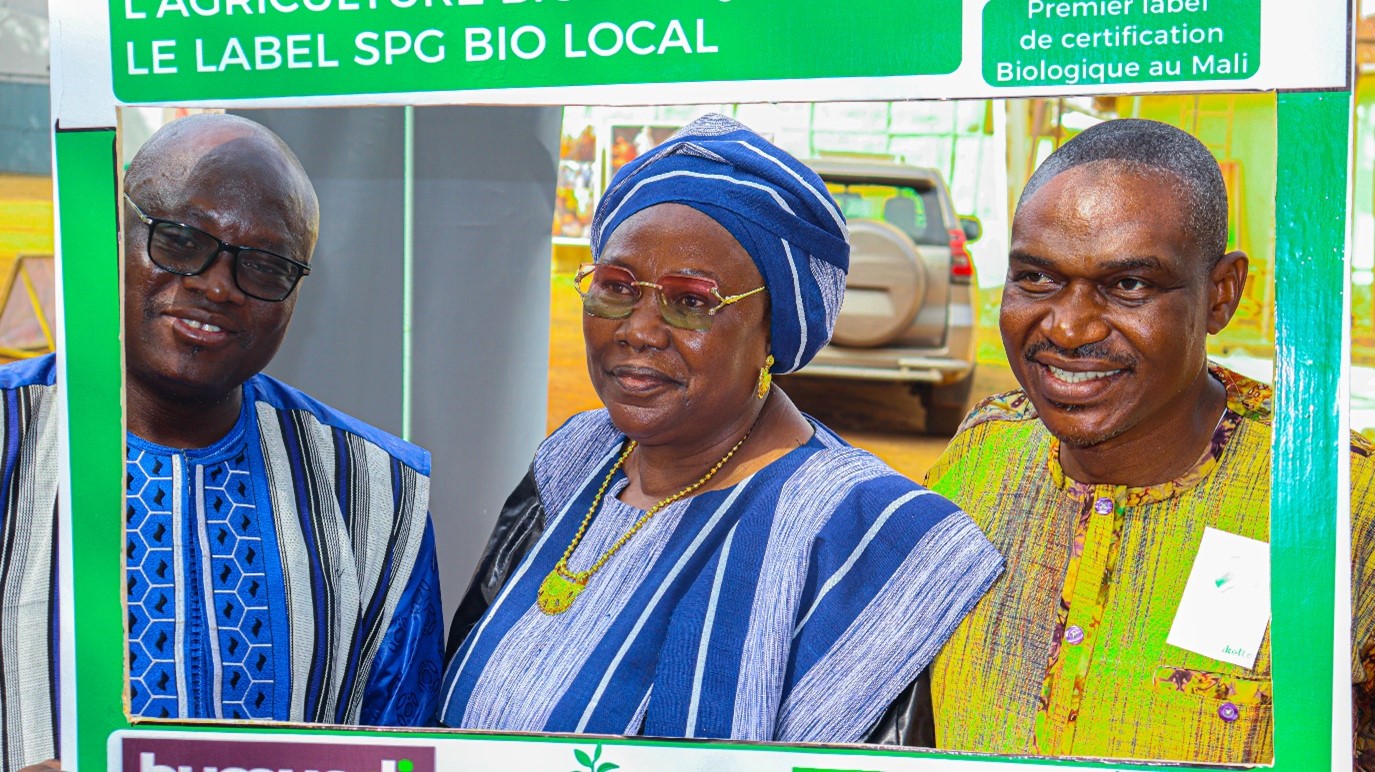
  • To promote the PGS Bio Local, a national certification committee (CNAC-Mali) was set up by Humundi, with technical support from Rikolto for rice. In 2023 the label PGS Bio Local has been officially registered by the Malian Center for the Promotion of Industrial Property (CEMAPI) for cereal, animal and vegetable production.
  • With the support of the Ministry of Agriculture, IFRIZ-M has started a collaboration with the National Bank for Agricultural Development (BNDA) in order to offer financial products that are better adapted to the needs of actors in the value chain. Three formulas are now available: the OPA Pack, the Affiliate Producer Pack and the PMEA Pack, intended respectively for farmers' organizations, individual producers and small businesses.

[1] Normally the price varies between 300 and 400 FCFA

Dummy image

Generation Food around the world

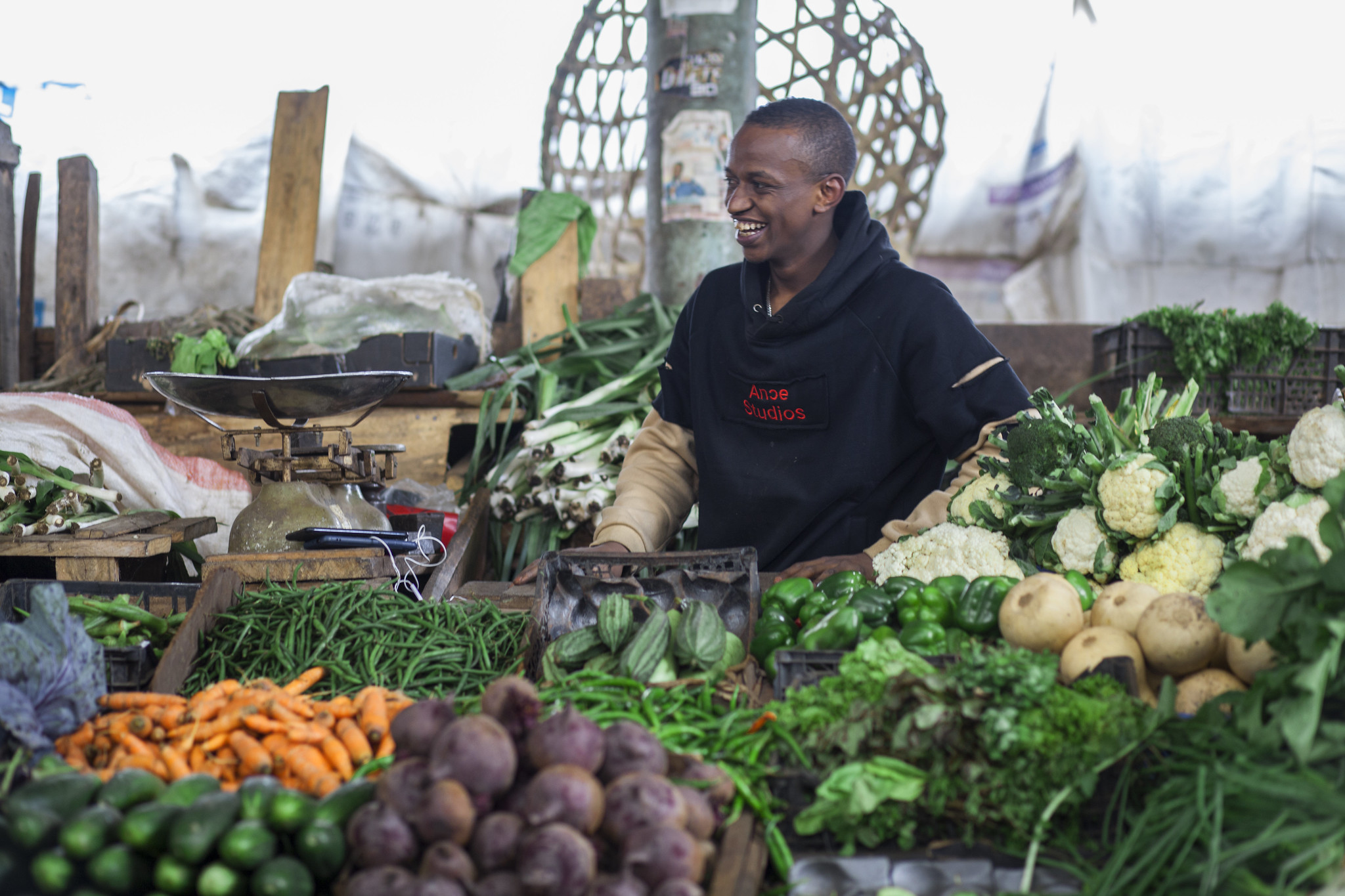
Generation Food is part of Rikolto's international program Food Smart Cities program. In various cities around the world, including Ouagadougou, Arusha, Arusha, Leuven, and Quito, Rikolto supports municipalities in formulating sustainable food policies and putting them into practice. In co-creation with universities, businesses, local food production/distribution initiatives, municipalities and farmers' cooperatives, we are developing business models (from farm to fork) that make the transition to sustainable cities possible. Through Generation Food, Rikolto advocates for the active participation of young people in the development of the future food system.
Read more

Who do we work with?

In Mali, our action is taking shape thanks to an ecosystem of actors involved throughout the rice value chain. We collaborate with:
  • producer organizations, such as the National Platform of Rice Producers (PNPRM), the Interprofession of the Rice Sector (IFRIZ) and the Kléla Rice Farmers Cooperative;
  • a large network of processing units such as Beni SARL, the Rizerie Royale, the Grand Moulin de Koulikoro, M3 SA, the Elie Diarra company, Riz KO2 and the Fad mini-rice mill;
  • other associations such as the Association of Consumers and Processors (ASCOMA), the Association of Women Steamers of San and the Dunkafa Cooperative, the National Association of Rice Processors and Faso Jigi;
  • public and technical institutions such as the National Directorate of Agriculture (DNA), the Office of Crop Protection (OPAM), the Food Technology Laboratory (LTA), the Institute of Rural Economy (IER) and the Rural Development Commission of the National Assembly;
  • financial and development partners such as ORABANK, Luxembourg Cooperation, Luxembourg Cooperation, GIZ, the NGO AMSD and the Elephant Vert group.
AMSD
Malian Association for Solidarity and Development
AMSD
ANTR-M
National Association of Rice Processors of Mali
ANTR-M
ASCOMA
Association des consommateur·rice·s du Mali
ASCOMA
Dunkafa
Dunkafa Cooperative of Corpaso steamers
Dunkafa
CORIPAK
Klela Irrigated Plain Rice Growers Cooperative
CORIPAK
IFRIZ Mali
Interprofessional Association of the Rice Sector in Mali
IFRIZ Mali
PNPRM
National platform for rice producers in Mali
PNPRM

Contact

Bréhima Dembele

Rice programme managerin Mali

brehima.dembele@rikolto.org
00223 79 19 48 71

Récits de terrain

Découvrez d'autres récits